Clinician Led Wellness Equipment Advice for Home Recovery
Table of Contents
- What Clinician-Led Wellness Equipment Guidance Actually Changes
- How to Evaluate Home Wellness Equipment Before You Buy
- Best Home Recovery Equipment for Athletes: Four Categories That Earn Their Floor Space
- Benefits of Red Light Therapy at Home: What the Wavelengths and Irradiance Numbers Tell You
- How to Choose a Home Sauna That Fits Your Room and Your Routine
- Maintenance, Safety Certification, and Inclusive Design
- Conclusion
- Frequently Asked Questions
Last Updated: September 30, 2026
What Clinician-Led Wellness Equipment Guidance Actually Changes
At Heaven Life Wellness, clinician-led means that research comes before recommendation. Our curated collection is built by evaluating the available scientific literature alongside the product specifications and performance characteristics that determine how each wellness technology is actually used.
We look beyond marketing claims to understand the variables that matter within each modality—from temperature and treatment area to wavelength, irradiance, pressure, and other technology-specific parameters. That evidence-informed approach allows us to select products intentionally and translate complex research and technical specifications into clear, practical guidance around how different technologies may support your wellness, recovery, performance, and longevity goals.
The goal is to move beyond simply asking, “Which product has the best specifications?” and instead ask, “Which product is designed to help me achieve the goals I’m investing in?”
That distinction matters. Someone interested in post-exercise recovery may prioritize different features than someone building a routine around relaxation, sleep, heat exposure, cold adaptation, or photobiomodulation. Our role is to make those differences easier to understand so you can choose from a collection that has already been intentionally evaluated and curated.
One of the advantages of choosing Heaven Life Wellness is the added layer of trust that comes from a clinician-led platform. We translate research and technical specifications into practical, consumer-friendly guidance while remaining transparent about what the evidence does—and does not—support. The FDA guidance on general wellness products also helps establish an important distinction between technologies intended to support general wellness and devices intended to diagnose or treat medical conditions.
And our guidance doesn’t end when the equipment arrives. Across our core modalities, Heaven Life Wellness offers additional education and foundational utilization protocols to help patrons better understand factors such as session duration, frequency, progression, timing, and other considerations that can influence how these technologies are incorporated into a consistent wellness routine.
Key Takeaway:
Clinician-led curation brings research, technology, and real-world application together. At Heaven Life Wellness, every product is selected with purpose—helping you understand not only what to choose, but why it matters and how to use it effectively as part of your wellness routine.
How to Evaluate Home Wellness Equipment Before You Buy
Most buying guides hand you a checklist. A clinician-led evaluation goes a step further, considering the practical factors that determine whether a wellness technology will actually work in your home and become part of your routine: fit, power, service, total cost of ownership, and the evidence behind its claims.
Step 1, Fit. Measure the exact footprint, then add clearance for doors, vents, access panels, and any hinged lid or door swing. A cold plunge means accounting for the tub, chiller, and hose run; a sauna means the cabin plus door swing; and a hyperbaric chamber means the shell, supporting equipment, and appropriate access to the installation space.
Featured: iCool Sport Cold Shower
The iCool Sport Cold Shower offers a different approach to cold exposure, delivering controlled cold water through a shower-style system rather than requiring a traditional plunge tub. Its compact format can be particularly appealing for home wellness spaces where footprint, installation, and ease of incorporating cold exposure into a daily routine are important considerations.
Step 2, Power. Confirm voltage, amperage, and whether the circuit must be dedicated.
A practical pre-purchase checklist:
- Measure the exact footprint, including clearance for doors, vents, and access panels
- Confirm the electrical requirement (voltage, amperage, dedicated circuit)
- Verify the surface can bear the unit's loaded weight
- Identify who services it locally if something fails
- Estimate five-year consumables and service costs, not just the purchase price
- Decide your minimum weekly sessions before you buy, not after
Best Home Recovery Equipment for Athletes: Four Categories That Earn Their Floor Space
Four categories consistently justify the square footage for athletes and active adults: red light therapy panels, infrared saunas, cold plunges, and hyperbaric oxygen chambers. Each serves a different recovery pathway, and most home setups combine two or three rather than all four.

Category |
Typical Footprint |
Session Length |
Best For |
Maintenance Load |
|---|---|---|---|---|
Red light panel |
Wall-mounted, minimal |
10-20 minutes |
Daily recovery, skin, sleep routine |
Very low |
Infrared sauna |
Corner or small room |
20-40 minutes |
Heat adaptation, relaxation |
Low |
Cold plunge |
2-4 sq ft plus chiller |
2-10 minutes |
Inflammation, cold tolerance |
Moderate |
Hyperbaric chamber |
Small room, reinforced floor |
60-90 minutes |
Deep recovery, oxygen therapy |
Moderate to high |
Red Light Panels: RH2400, RH3600, and SL5000 Compared
Three full-body panels from Heaven Life Wellness cover most home setups, differing in coverage area, output, and price.
Saunas, Cold Plunges, and Hyperbaric Chambers
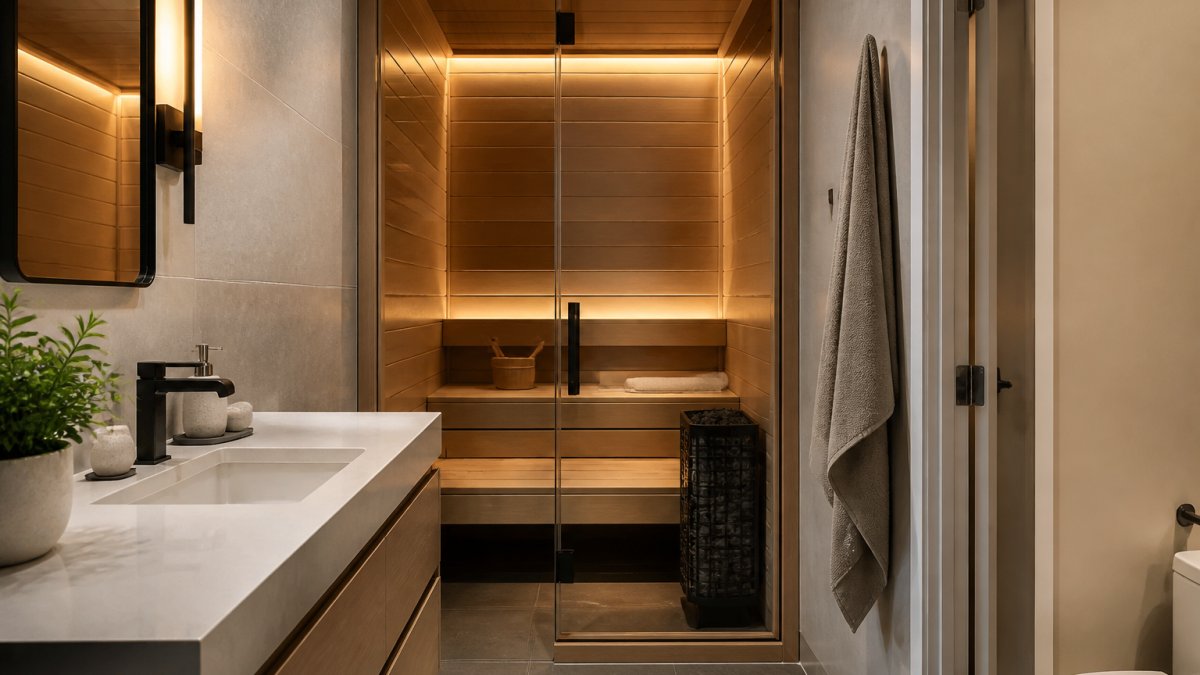
Saunas handle heat adaptation and relaxation. The Dynamic Saunas Andora 2-Person Low EMF FAR Infrared Sauna ($2,849.00) runs on a standard 120V/15A dedicated outlet, making it easiest to place in a bedroom or fitness room. The Maxxus 3-Person Corner Low EMF FAR Infrared Sauna ($3,779.00) uses a corner footprint to reclaim floor space while adding a third seat.
Benefits of Red Light Therapy at Home: What the Wavelengths and Irradiance Numbers Tell You
The benefits of red light therapy at home come down to two specifications: wavelength, which determines how deep light penetrates, and irradiance, which determines how much energy reaches tissue per second.

How to Choose a Home Sauna That Fits Your Room and Your Routine
Match the sauna to the room before the brochure. Measure the corner or wall you have, then check ceiling height and door swing. A two-person unit can fit a bedroom or basement; a three-person corner model needs a dedicated wellness room or a generous corner.
RH2400 Full Body Red Light Wellness →
Maintenance, Safety Certification, and Inclusive Design
Three things get ignored until they cause a problem: maintenance schedules, safety certification, and whether the equipment works for every body in the house. This is where a clinician-led approach earns its keep, because a device safe and usable on day one can become neither by year three without a plan.
Maintenance schedules that keep equipment clinician-grade
A maintenance log separates a clinical-grade setup from a home gym with expensive gear. The cadence is simple but non-negotiable:
- After every session: wipe surfaces, dry condensation, and leave lids or doors open to ventilate.
- Weekly: check ventilation paths, inspect seals and gaskets, and confirm controls respond as expected.
- Monthly: inspect power cords and plugs for wear, clean or replace filters, and test emergency stops or release mechanisms.
- Annually: inspect wiring, heating panels, and wood or shell condition; service chillers and ozone cells; and have a qualified technician verify electrical integrity.
Safety certification and regulatory anchors
Safety is not a feature; it is documentation. Look for overpressure relief valves and emergency release systems on hyperbaric chambers, low-EMF heating panels on saunas, and ozone sanitation on cold plunges. Ask for the certification paperwork, not just the marketing badge. The U.S. Consumer Product Safety Commission publishes guidance on household product safety worth checking against any large installation, and the FDA guidance on wellness device claims clarifies when a product crosses from general wellness into medical device territory, a distinction that affects both your expectations and your liability.
Inclusive design standards
Inclusive design is the gap most competitors miss. A recovery suite that only works for one body type is not a recovery suite. Evaluate every unit against these criteria:
- Entry and exit: seated entry options, low thresholds, and doors that don't require heavy lifting or a wide grip.
- Reach and control: controls reachable from inside the unit, with large labels and clear feedback.
- Stability: handholds or grab points for balance support during entry, exit, and use.
- Lighting: interior lighting that doesn't require a phone flashlight to navigate safely.
- Clearance: enough room to transfer from a mobility device or a seated position.
- Temperature and pressure safety: accessible emergency release and a clear, reachable shutoff.
Conclusion
The hardest part of building a Home Longevity Suite isn't choosing equipment. It's choosing equipment you'll actually use for years, in a space that supports it, with support you can reach when something needs attention. Heaven Life Wellness was founded by Andrea Bouchard, CRNA, to close that gap with clinician-led guidance, curated premium products, and residential integration planning for the Home Longevity Suite™.
Frequently Asked Questions
What criteria should you use to evaluate home wellness equipment?
Start with the specifications that decide whether the device does anything: irradiance measured in mW/cm² at a stated distance, wavelength count, EMF output, and a clear warranty term. Then check the practical side, including power requirements, floor loading, and whether replacement parts are available. Clinician led wellness equipment advice weighs both, because a panel with strong output numbers still fails if it cannot be serviced or does not fit the room you have.
Why is clinician-led advice important for selecting recovery technology?
A clinician reads specifications the way a buyer cannot easily do alone. They compare irradiance at the distance you will actually stand, flag EMF levels, and match equipment to a goal rather than to a marketing page. Heaven Life Wellness was founded by Andrea Bouchard, CRNA, and the guidance focuses on how each device fits your space, lifestyle, and recovery routine before you commit to a purchase.
What safety standards should wellness equipment meet for home use?
Look for grounded plugs, low EMF output, and overpressure relief systems on any pressurized device. Hyperbaric chambers need automatic and manual pressure relief valves plus a reinforced floor, since the CY7 weighs between 2,645 and 3,086 pounds empty. Standardized protocols and regulatory compliance matter more on pressurized equipment than on light panels.
How do you integrate professional-grade recovery tools into a residential space?
Measure first, then plan power and floor loading. The Andora 2-person sauna runs on a 120V/15A dedicated outlet, which most homes already have, while the 3-person corner model needs a larger footprint. Cold plunges work indoors or outdoors because the All-In-One unit is winterized to -20°F. Hyperbaric chambers require a level concrete slab or reinforced load-bearing floor. Facility optimization is really about sequencing: decide the room, then the equipment.
Is home recovery equipment worth the investment for someone who is not an athlete?
Regular use matters more than peak output. A red light panel at $2,967.20 or a 2-person sauna at $2,849.00 supports daily relaxation and recovery habits that fit a normal schedule. The question is not whether you train like a professional, but whether the device sits somewhere you will use it four or five times a week. Equipment that gets used beats equipment with the highest specification sheet.