Best Home Recovery Equipment for Athletes: 2026 Guide
Table of Contents
- Quick Comparison: Best Home Recovery Equipment for Athletes
- Cold Plunge Tubs for Post-Workout Recovery
- The Benefits of Red Light Therapy for Athletes
- Sauna vs Cold Plunge for Muscle Recovery
- Hyperbaric Chambers: Advanced Recovery Technology
- How to Design a Home Recovery Room
- Contraindications and Safety for Home Recovery Equipment
- Maintenance and Longevity
- Frequently Asked Questions
Last Updated: September 25, 2026
Quick Comparison: Best Home Recovery Equipment for Athletes
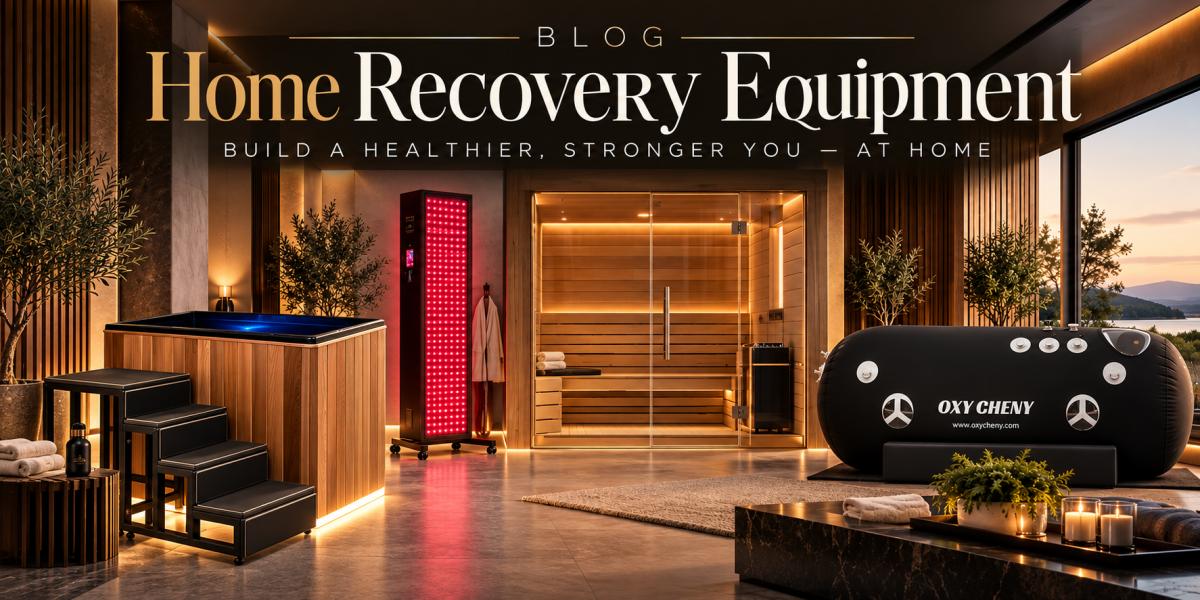
The best home recovery equipment for athletes is the setup that matches your training load, available space, and how consistently you will actually use it. At Heaven Life Wellness, we help athletes and longevity-minded homeowners build dedicated recovery spaces rather than collect gadgets. This guide covers the specific systems worth the investment in 2026.
Recovery is not a luxury add-on anymore. It is where adaptation happens. Training creates the stimulus; recovery is where the body rebuilds. According to the American College of Sports Medicine, recovery strategies should be periodized alongside training rather than treated as an afterthought.
Here is how the major categories stack up:
Equipment |
Typical Session |
Primary Use |
Best For |
|---|---|---|---|
Cold plunge |
10-15 min |
Inflammation reduction, blood flow |
Post-workout recovery |
Red light panel |
10-20 min |
Tissue repair, muscle soreness relief |
Daily recovery |
Sauna |
15-30 min |
Blood flow, relaxation |
Heat adaptation |
Hyperbaric chamber |
60-90 min |
Advanced recovery, oxygenation |
Serious athletes |
Below, we break down each category with real options from our catalog, plus the space and installation considerations most buyers overlook.

Cold Plunge Tubs for Post-Workout Recovery
A cold plunge tub is the single most impactful recovery purchase for most athletes. Cold water immersion triggers vasoconstriction, which reduces inflammation and flushes metabolic waste from muscle tissue. The key is consistency, and that is exactly where an at-home unit beats a gym membership.

iCoolSport MiPod Pro Cedar Chill
The MiPod Pro Cedar Chill is our top cold plunge pick for athletes who want a permanent, furniture-grade installation. The 1.1-meter depth is the detail that matters: most residential plunges are too shallow for full lower-body immersion, and that depth changes how the session feels.
The 5000-watt Panasonic or Mitsubishi rotary compressor cools water to 39°F in under two hours, and the unit runs 24/7 without manual ice. Running costs sit as low as $0.40 per day. The Australian cedar exterior pairs well with timber saunas, and the 30-milliamp industrial RCD adds a meaningful safety layer.
Price: $16,499.00
The trade-off is footprint. At roughly 1,322 lbs filled, it needs a level, load-bearing surface. Plan the location before delivery.
Ice Dragon Cold Plunge Tub Pro
If budget or space is tighter, the Ice Dragon Cold Plunge Tub Pro is the practical entry point. The complete system includes the tub and a 1HP smart water chiller with app-based Wi-Fi temperature control, so you can set a target and walk away.
Price: $1,999.00
Dynamic Cold Therapy Barrel Cold Plunge
The Barrel Cold Plunge solves the space problem. Its vertical design takes up far less floor area than a horizontal tub, making it viable for a home gym corner, deck, or compact wellness room.
Price: $3,699.00
The Benefits of Red Light Therapy for Athletes
The benefits of red light therapy for athletes come down to wavelength and dose. Red and near-infrared light penetrate tissue and support cellular energy production, which is why so many athletes now use it for muscle soreness relief and tissue repair between sessions.
Full Body Red Light Wellness Device
This is the largest full-body panel we carry, built around 840 high-output 5W LEDs across seven wavelengths spanning blue, red, and near-infrared. The motorized mobile stand rotates 360 degrees and adjusts vertically from 0.7m to 1.7m by remote, which means you can reposition it for a full-body session or a focused area without moving furniture.
Price: $2,999.00
RH2400 Full Body Red Light Wellness Panel
The RH2400 is the more technical choice, available in 5-waveband or 7-waveband configurations with 210 commercial-grade LEDs wired in gold on copper holders.
Price: $2,967.20
Sauna vs Cold Plunge for Muscle Recovery
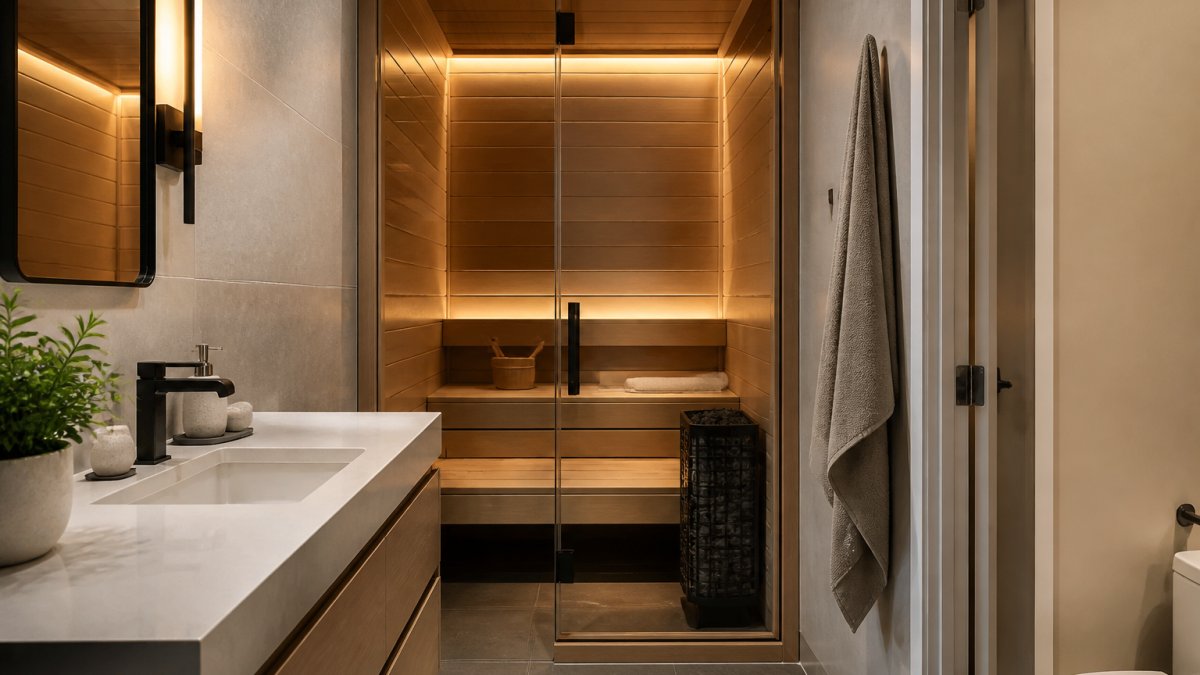
Sauna vs cold plunge for muscle recovery is not really a competition. They do different jobs, and the athletes getting the most from their recovery rooms use both.
iCoolSport MiPod Pro Cedar Chill →

Golden Designs "Toledo" 6-Person Hybrid Sauna
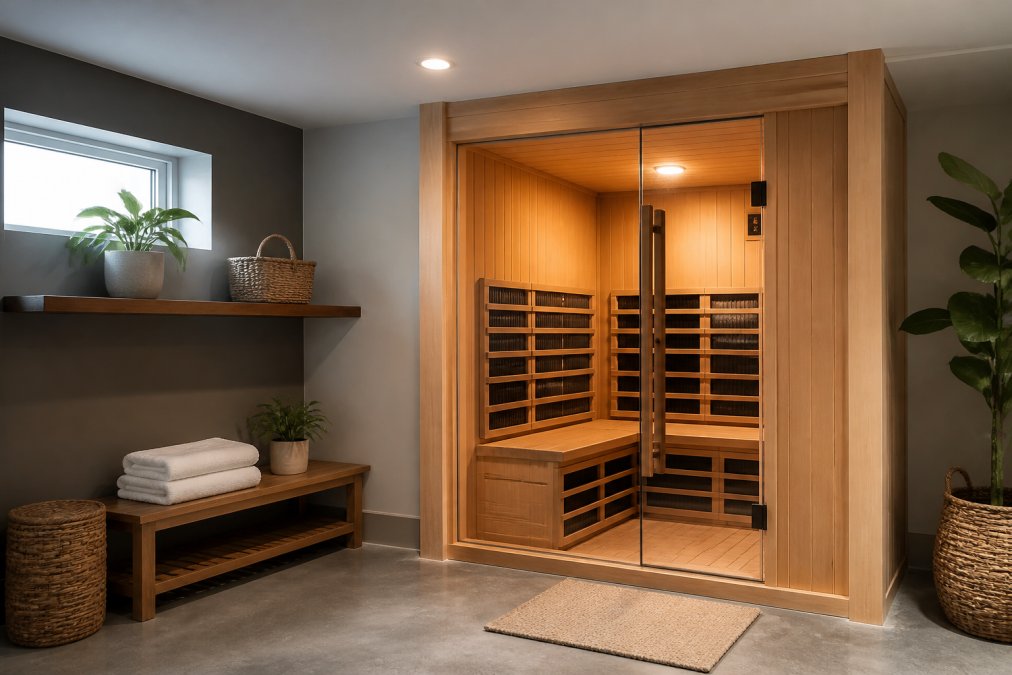
The Toledo is the most flexible sauna in our catalog because it does both heat formats. You get a traditional 8.0 kW Harvia steam stove and PureTech full spectrum infrared, with 13 total emitters including 5 carbon near-zero-EMF panels.

Price: $12,999.00
Finnish Sauna Builders Tampere Barrel Sauna
For outdoor installations, the Tampere 4-person barrel sauna is the cleaner fit. The 8kW Spirit WiFi heater lets you preheat from your phone, typically to 170°F-185°F, so the sauna is ready when you finish training.
Price: $12,931.00
Hyperbaric Chambers: Advanced Recovery Technology
Hyperbaric chambers are the deepest end of home recovery equipment, and they are no longer clinic-only. These systems deliver concentrated oxygen in a pressurized environment, and athletes use them for recovery support between heavy training blocks.
OxyCheny CY8A Portable Soft-Shell Chamber
The CY8A is the practical entry into hyperbaric therapy at home. It delivers 2.0 ATA working pressure, which is higher than the 1.5 ATA portable models in the same line, while keeping a foldable soft-shell design.
Price: $8,990.00
OxyCheny CY6 Sitting Hard-Shell Chamber
The CY6 is the flagship. Instead of lying down, you sit upright in an executive-style seat, which makes longer sessions far more comfortable. You can read, work, or relax rather than stare at a ceiling.
Price: $27,500.00
How to Design a Home Recovery Room
Designing a home recovery room starts with three decisions: what modalities you will use daily, how much floor area you can dedicate, and where the electrical and drainage runs will go. Get those right and the rest is layout.
Work through this checklist before you buy anything:
- Measure the room, including door width and ceiling height for delivery access
- Confirm floor load capacity for filled cold plunge units and chambers
- Map dedicated electrical circuits
- Identify drainage or a drain-adjacent location for plunge maintenance
- Plan ventilation for chillers, saunas, and chambers
- Zone the room: cold on one side, heat on the other, light therapy in the center
- Leave clearance around every unit for service access
- Choose finishes that handle moisture and heat
Contraindications and Safety for Home Recovery Equipment
Safety comes before performance with every modality here. Cold exposure, heat exposure, light therapy, and pressurized oxygen all have real contraindications, and the honest answer is that some athletes should clear a specific tool with a physician first.
A few practical rules apply across the board:
- Start with shorter sessions at less extreme temperatures and build gradually
- Never use cold plunge or sauna alone if you have a known cardiac condition
- Stay hydrated before, during, and after heat sessions
- Wear protective eyewear during red light sessions
- Follow each manufacturer's operating and maintenance instructions exactly
- Keep emergency pressure-relief systems accessible on any chamber
Maintenance and Longevity
Recovery equipment is an investment, and how long it lasts depends on upkeep. Cold plunge owners should replace pleated filter cartridges on schedule and run ozone sanitation consistently. Sauna owners should inspect wood surfaces and follow the manufacturer's care guidance to protect the structure. Red light panels need dust-free ventilation and a wipe-down of the protective acrylic. Hyperbaric chambers require clean interiors and adherence to the manufacturer's operating and maintenance instructions.
Frequently Asked Questions
What is the best recovery tool for athletes to use at home?
The best home recovery equipment depends on your training load and recovery goals. Cold plunge tubs like the iCoolSport MiPod Pro Cedar Chill ($16,499) help reduce inflammation and muscle soreness after intense sessions. Red light therapy panels support tissue repair and blood flow. Saunas promote relaxation and circulation. Many athletes combine two or three tools for a complete recovery protocol rather than relying on one.
How do red light therapy and saunas aid in athletic recovery?
Red light therapy uses specific wavelengths (630nm to 940nm) to support tissue repair, reduce inflammation, and improve blood flow to muscles. Saunas raise core temperature, which supports vasodilation and helps muscles relax after training. Both are non-invasive and fit easily into a daily routine. The Full Body Red Light Wellness Device ($2,999) and the Golden Designs Toledo Hybrid Sauna ($12,999) are two options that bring these benefits home.
How often should athletes use home recovery equipment?
Frequency depends on the tool and your training schedule. Cold plunges are often used 2-4 times per week after intense sessions, with 10-20 minute immersions at 50-59°F for general use. Red light therapy sessions typically run 10-20 minutes daily or every other day. Sauna sessions are commonly 15-30 minutes, 3-5 times per week. Start conservatively and adjust based on how your body responds.
What should be included in a professional-grade home recovery suite?
A well-rounded home recovery suite for athletes typically includes at least one cold therapy option (like a cold plunge tub), one heat therapy option (like a sauna), and one light-based or compression tool. Hyperbaric chambers add advanced oxygen support. The goal is covering multiple recovery pathways: inflammation reduction, circulation, tissue repair, and relaxation. Space, budget, and installation requirements will shape which combination works best for your home.
Are there any safety concerns with home recovery equipment?
Yes. Cold plunges are not appropriate for people with certain heart conditions, and pregnant individuals should consult a healthcare provider before use. Saunas require hydration and caution if you are sensitive to heat or on medications. Red light therapy users should wear protective eyewear. Always follow the manufacturer's guidelines, start with shorter sessions at moderate settings, and consult a qualified professional if you have any health concerns before starting a new recovery routine.