Article: Benefits of Home Hyperbaric Oxygen Therapy
Benefits of Home Hyperbaric Oxygen Therapy
Table of Contents
- What Home Hyperbaric Oxygen Therapy Actually Does
- The Core Benefits of Home Hyperbaric Oxygen Therapy
- Home Hyperbaric Chamber Effectiveness: What the Evidence Shows
- How Often to Use a Hyperbaric Chamber for Best Results
- Soft-Sided vs Hard-Sided Hyperbaric Chamber: Which Fits Your Home
- Hyperbaric Oxygen Therapy Side Effects and Safety Planning at Home
- Home vs Clinic Treatment: Cost, Convenience, and Access
- Choosing the Right Chamber for Your Home Longevity Suite
- Frequently Asked Questions
Last Updated: October 5, 2026
What Home Hyperbaric Oxygen Therapy Actually Does
Home hyperbaric oxygen therapy is the use of a personal hyperbaric chamber in a residential setting to breathe concentrated oxygen inside a pressurized environment, and its core purpose is to raise the amount of oxygen dissolved in your bloodstream so more of it reaches tissues that are healing, inflamed, or underperforming.
The mechanism is straightforward physics. A hyperbaric chamber raises the atmospheric pressure around you, typically to between 1.3 and 2.0 ATA in home systems.

How Pressurized Oxygen Reaches Your Tissues
Under pressure, oxygen dissolves into the liquid portion of your blood.
Three things happen as pressure rises:
- Blood oxygen levels climb, and oxygen saturation stays elevated longer after a session
- Oxygen reaches areas with poor blood flow that red blood cells alone can't service efficiently
- The repeated pressure-and-oxygen exposure triggers a healing response at the cellular level, including signaling that supports new blood vessels
This is why hyperbaric therapy is studied for wound healing rather than simply sold as "more oxygen." The pressure is doing work that oxygen at sea level cannot.
The Core Benefits of Home Hyperbaric Oxygen Therapy
The benefits most consistently described in hyperbaric research cluster into three areas: tissue repair, blood vessel growth with reduced inflammation, and recovery and energy support. The strength of the evidence behind each one varies considerably, and that distinction matters when you're deciding what to buy.
1. Faster Wound Healing and Tissue Repair
Hyperbaric oxygen therapy is best established for chronic wounds that have stalled. In clinical settings, HBOT is used for diabetic foot ulcers, compromised grafts, and tissue damaged by radiation, where poor blood supply prevents normal healing.
For home users without a diagnosed wound, the realistic expectation is different: mild chambers are wellness tools, not wound-care devices. If you have an open wound, a chronic ulcer, or a non-healing surgical site, that belongs under medical supervision, not in a home chamber.
2. New Blood Vessel Growth and Reduced Inflammation
Angiogenesis, the growth of new blood vessels, is one of the better-documented effects of hyperbaric oxygen exposure. Repeated sessions stimulate growth factors and support the formation of new capillaries, which improves long-term circulation to the treated area.
Alongside that, hyperbaric exposure interacts with the immune system and inflammation pathways. Some studies describe a reduction in inflammatory markers and improved cellular function. This is the mechanism that makes HBOT relevant to recovery rather than just wound care.
3. Athletic Recovery, Energy, and Cognitive Support
Athletes and high performers use mild hyperbaric sessions for recovery between training blocks, and this is where home chambers have found their largest audience. The appeal is straightforward: reduced soreness, faster turnaround between sessions, and a recovery tool available on demand rather than by appointment.
Claims about cognitive support and energy are weaker. Some users report better sleep and focus, and there is ongoing research interest in hyperbaric exposure and brain function, but the evidence for cognitive benefit in healthy adults is not settled. Treat those claims as promising rather than proven.
Home Hyperbaric Chamber Effectiveness: What the Evidence Shows
Home hyperbaric chamber effectiveness depends almost entirely on one variable: whether the chamber reaches a pressure and oxygen concentration that has been studied. A chamber that pressurizes to 1.3 ATA with ambient air is a different intervention from a clinical chamber running 2.0 to 2.5 ATA with 100% oxygen.
That gap explains most of the confusion online. Clinical HBOT protocols are defined by specific pressure and oxygen combinations, delivered under medical supervision, for specific approved indications. Home chambers marketed for wellness operate below those clinical parameters.
Approved Clinical Indications vs. Wellness Claims
In the United States, hyperbaric oxygen therapy is a recognized medical treatment for a defined list of conditions, including carbon monoxide poisoning, decompression sickness, non-healing diabetic wounds, and delayed radiation injury. Those indications are set by the Undersea and Hyperbaric Medical Society and recognized by the FDA's guidance on hyperbaric oxygen therapy devices and the CMS coverage determinations for hyperbaric oxygen therapy.
Wellness claims sit outside that list. Improved energy, anti-aging, athletic performance, and general "cellular optimization" are not approved indications. That doesn't make them false by default, but it does mean the evidence is thinner and the burden of judgment falls on you.
How Often to Use a Hyperbaric Chamber for Best Results
Typical home protocols run 3 to 5 sessions per week at 60 to 90 minutes each, with many users settling into 3 to 4 weekly sessions for general recovery and more frequent use during intense training blocks. Clinical protocols are usually more aggressive, often daily, but those are prescribed and supervised.
Consistency matters more than intensity for home use. A user who does four sessions a week for months will generally see more cumulative benefit than someone who does ten sessions in one week and then stops.
A few practical rules we'd give anyone starting out:
OxyCheny Lying Hard Shell Hyperbaric Chamber CY1 →
- Start at 30 to 45 minutes and lower pressure, then build up over the first two weeks
- Take a day off if you feel ear discomfort that doesn't clear
- Don't stack a session immediately after a hard training session if you're new to pressure exposure
- Log sessions and how you feel for the first month so you can judge whether it's working for you
Soft-Sided vs Hard-Sided Hyperbaric Chamber: Which Fits Your Home
Soft-sided chambers are the practical choice for most homes, while hard-sided chambers suit buyers who want higher pressure and a permanent installation. The trade-off is pressure capability, footprint, and cost.
Soft-sided chambers use medical-grade TPU and fold down when not in use, which makes them viable in a spare room, home gym, or wellness suite.
Feature |
Soft-Sided |
Hard-Sided |
|---|---|---|
Typical pressure |
1.3-2.0 ATA |
2.0 ATA and up |
Footprint |
Folds away |
Permanent |
Best for |
Home recovery, flexibility |
Dedicated wellness rooms |
If you want a chamber that can live in a multipurpose space, a soft-sided model is the sensible starting point. If you're building a dedicated recovery room and want the highest pressure available for home use, go hard-sided.
Hyperbaric Oxygen Therapy Side Effects and Safety Planning at Home
Most side effects of hyperbaric oxygen therapy are mild and pressure-related: ear pressure, temporary discomfort, and occasional sinus pain during pressurization. Barotrauma to the ear is the most common issue, and it's usually preventable with proper equalization technique.
More serious risks exist but are rare and largely tied to clinical-grade exposure.
Safety planning for a home chamber comes down to a short list:
- Keep all ignition sources, including candles, lighters, and smoking materials, out of the room
- Never use oils, petroleum-based lotions, or alcohol-based products on your skin before a session
- Confirm the chamber's emergency relief valve works before every session
- Tell someone in the house when you're getting in and how long you'll be in
- Keep the concentrator on a hard surface with clearance for ventilation
- Stop and depressurize if you feel chest pain, shortness of breath, or vision changes
Certain conditions warrant a conversation with a physician before you start, including untreated pneumothorax, certain ear or sinus conditions, and some lung diseases. If you take medications, ask whether any interact with pressure or oxygen exposure.
Home vs Clinic Treatment: Cost, Convenience, and Access
Home treatment wins on convenience and long-run cost, while clinic treatment wins on pressure, oxygen concentration, and medical supervision. Which one is right depends on whether you're treating a diagnosed condition or supporting general recovery.
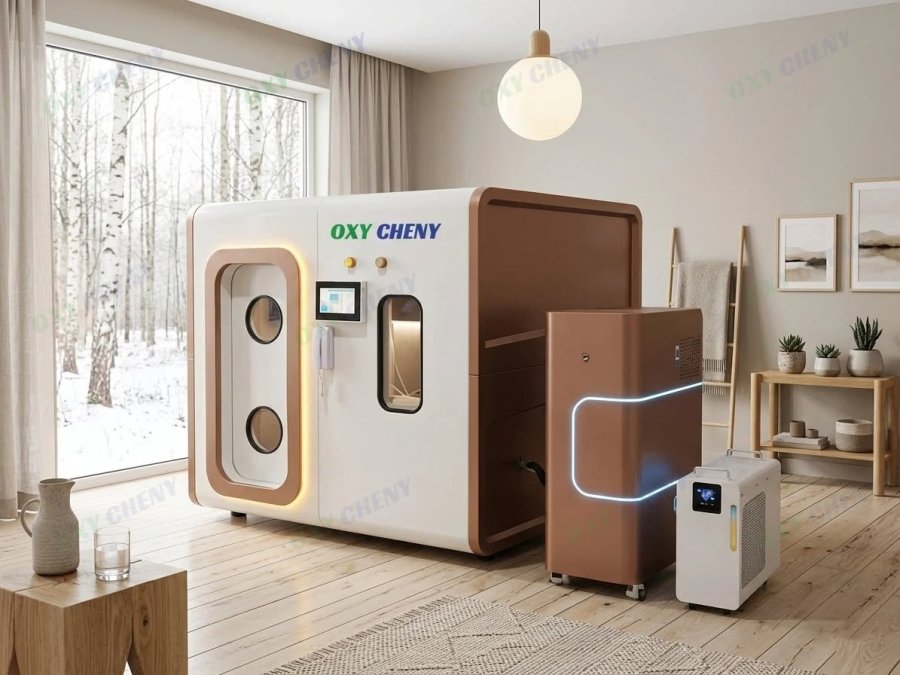
A clinical HBOT session typically runs several hundred dollars per visit, and a full course can mean dozens of sessions. Home chambers are a one-time purchase, which is why buyers doing the math for regular recovery use tend to land on home equipment. Our hard-shell OxyCheny CY1, for example, is a $16,100.00 lie-down chamber with an aluminum alloy hull, a wide sliding window, and a 15 L/min oxygen concentrator and air conditioner included, built for a permanent spot in a dedicated recovery room.

For buyers who want clinical-grade capability without a rigid installation, a 2.0 ATA soft-shell chamber is the middle path.
Choosing the Right Chamber for Your Home Longevity Suite
The right chamber is the one whose pressure, footprint, and oxygen delivery match how you'll actually use it. Buy for your real routine, not for the best-case scenario you imagine.
At Heaven Life Wellness, we build these decisions into the Home Longevity Suite™, our approach to integrating recovery equipment into a home so it fits the space and the daily habit.
Three questions decide most of it:
- What pressure do you actually need? Clinical studies use higher pressures than most home users require. If you're buying for recovery and general wellness, 1.5 ATA is a reasonable target. If you want the highest home-use pressure available, look at 2.0 ATA soft-shell or hard-shell options.
- Where will it live? A foldable soft-shell chamber can share a room. A hard-shell chamber needs its own footprint and a plan for getting it through doors and stairwells.
- How often will you really use it? If the answer is three or more times a week, home equipment pays for itself over clinic visits. If it's once a month, the math changes.
Where most buyers go wrong is overbuying pressure they won't use and underbuying on comfort features like air cooling and chamber size.

Frequently Asked Questions
Are home hyperbaric chambers effective?
Home hyperbaric chambers can be effective for wellness goals like recovery and relaxation, but their effectiveness depends on the pressure they reach and how consistently you use them. Soft-sided chambers typically operate at 1.3 to 1.5 ATA, while some models like the OxyCheny CY8A reach 2.0 ATA. Clinical HBOT for approved conditions uses higher pressures and medical supervision, so home use is best viewed as a complementary recovery tool rather than a replacement for prescribed treatment.
How many times a week should I use a hyperbaric chamber?
Most home users follow a schedule of 3 to 5 sessions per week, with each session lasting 60 to 90 minutes. Some people start with daily use for the first few weeks and then taper to a maintenance schedule. The right frequency depends on your goals, your chamber's pressure rating, and how your body responds. Track your sleep, energy, and recovery between sessions and adjust gradually rather than jumping straight to daily use.
What is the downside of a hyperbaric chamber?
The main downsides include cost, space requirements, and potential side effects like ear pressure or barotrauma if you pressurize too quickly. Soft-sided chambers take up floor space and require a dedicated outlet for the concentrator. Hard-sided chambers cost more and may need professional installation. There is also a fire risk if oxygen concentrators are used near flammable materials, so follow the manufacturer's safety instructions and keep the area clear.
Are soft-sided home hyperbaric chambers as effective as hard-sided chambers?
Soft-sided chambers generally reach lower pressures (1.3 to 2.0 ATA) than hard-sided chambers, which can go higher. For wellness use such as recovery and relaxation, a 1.5 ATA soft-sided chamber like the OxyCheny CY8B can be sufficient and is easier to store. Hard-sided chambers like the OxyCheny CY1 offer more consistent pressure and durability but cost more and require more space. The best choice depends on your goals, budget, and available room.
The challenge with home hyperbaric oxygen therapy isn't finding a chamber, it's choosing one that matches your pressure needs, your space, and your actual routine. Heaven Life Wellness can help you work through that decision with clinician-led guidance, a curated selection of hard-shell and soft-shell chambers, and support for installation planning, delivery, and after-sale questions. Explore our hyperbaric chamber collection and build the recovery setup that fits your home.